I did not think I would write about Stranger Things. I had watched the first season, kind of enjoyed it, and did not think further about it until I started readings in the New York Times how popular it had been and how excited many people were about the upcoming finale.
So I watched the whole thing again from the first to the last season. Again, I kind of enjoyed thing and, of course, started doing anthropology when things got slow.
I will assume that Wikipedia (like ChatGPT) is a good enough source to get a mostly non-controversial consensus about something like a popular culture product. Wikipedia says that “The show combines elements of horror, science fiction, mystery, coming-of-age, and drama.” It also gives statistical evidence about its success with various audiences. I imagine most of those who watched it “kind of enjoyed it” even when the initial wonder about the premise and conceit became obvious. I knew from the beginning that the monster would be vanquished, but found interesting the way the writers took us there.
I am not going to write about the obvious: horror, fantasy, science fiction. I am generally a sucker for the latter but there is not much of this after the first season. I generally pass the other two genres.
What I focus on, today, is on the way Wikipedia develops the “coming-of-age” trope by noting that the writers tell us that the action happens “in a town where nothing ever happens.” This town, “Hawkins,” is located “in Indiana. Locating it in Maine, Wyoming, Alabama, California, locations would probably have required other site-setting cliches. In any event, Hawkins appears mostly as homes, a research lab, and above all, the School. The School (middle and high) brings together the heroes and sets one of the central tensions of the show: the relationship between friends playing Dungeon & Dragons who are identified as “freaks” and bullied by a caricatural posse of “jocks.” The friends will save the world threatened by adults who are either evil (researchers, the military, the State) or just clueless (parents, teachers, administrators). And the friends are led by an ultimate outsider, a person without a name (“El”), who leaves after the victory against the human and non-humans demons. She leaves, alone and to the sorrow of all, because her staying would trigger again what she started, unwittingly.
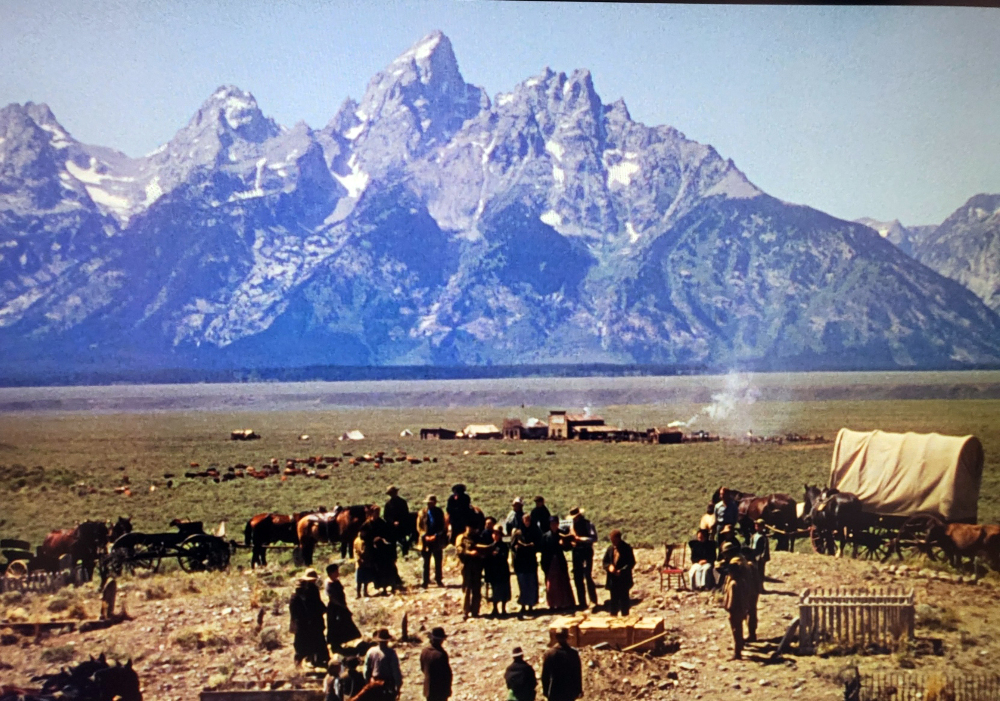
I am, of course, accentuating certain aspects of this epic, to stress its familiarity, and to wonder about the stability of the tropes and conceits. In that vein, Stranger Things could be taken as remake of Shane, and many other products of the American imagination as proposed by corporations (Hollywood, Netflix) and widely enjoyed. For those who do not know the novel/movie Shane it is a story about a group of new friends settling themselves in conflict with an evil entity who wants to evict, or kill, them all. They fight back led by a man with just one name (“Shane”), no past he will mention, and who leaves at the end, after the victory, because his staying (after killing the evil ones) would threaten the future peace of the friends
Let’s return to the “coming of age” trope. It is, of course, a very common one that is developed in many ways. It may appear as tragedy (as in Dreiser’s American tragedy), or drama as in Pretty in pink. It might be treated on a comic mode as in movies like Ferris Buehler’s day off. Or it may be treated more ponderously as in movies like American Graffiti or The last picture show. The list is long! I might even include Divergent (high school student fighting cliques to transform the world), or even Barbie and, why not Legally Blonde or even the much older movie Pillow talk which plays off one of the not so minor theme in Stranger Things: the off (at the start) and on (sometimes), and off again, romances.
The high point in the coming of age saga is, of course, high school graduation and, not so rarely, the valedictorian speech that summarizes it. The one in Stringer Things is wonderfully … familiar
And then, it is my please to introduce someone who truly excelled during their time here
Henderson:
[Over the past years] there was a lot of bad … and a lot of good but but chaos can bring innovation, change, and this school, frankly it needed to change because we were so divided into the jocks, the nerds, freaks and in the chaos all these wall broke down and I made new friends. I made friends who were never even supposed to be my friends. And this was not just me. I saw this happen with so many others. And when you get to know people who are so different from you, you begin to learn more about yourself, you change, you grow. I am a better person now because of them, because of my friends. So I am not pissed off anymore but I am worried that, because now the chaos is over, Principal Higgins and every square like him is gonna do their damnedest to put everything back in order and I don’t want order
I have highlighted all the indexes (as I would now write about them) that led me to title my dissertation “Individualism, community, and love”:
- “I am a better person [who] learned about myself” (individualism)
- We are “friends who were never supposed to be my friends” (community)
- “walls that broke down … and we made new friends that were not supposed to be our friends” (love).
In the dissertation, and the book that followed, a book I would now title “Together in America” rather than “Americans Together” (1978), I failed to face the critique of the State that is also inscribed in the speech (and in the script of Divergent, Barbie, or, prototypically, Shane)
The anthropological mystery in all this concerns the stability of what Lévi-Strauss might have called a “structure” (or what Propp called a “form,” or what AI uses to generate products that look more than right). One might focus on what may have changed over the years: the most visible might be the interracial romance, the gay and lesbian characters or the principal’s use of “their” to introduce the male hero.
These differences may actually help us understand the stability not in terms of “enculturation,” or “habitus,” but rather in term of the kind of corrective instruction that concerned Garfinkel when he wrote what I now consider should be the foundation of all theories of order: “when you screw around, then you get instructed.” So, I would interpret Netflix’s casting and scripting as responding to a fear of corrective instruction by voices inside and outside the corporation telling them: “why no black characters?! “why no gender diversity?!” voices that the producers of Shane would not have to worry about (though they probably had to worry about the overt critique of State and Economy that made them project into a mythical valley the struggle trade unions were conducting against the dominant corporations, mention of which might have led to be branded “communists”—a very dangerous things at the time).