Once upon a time, during my first two decades at Teachers College (in the department of, at first, Home & Family Life later reconstituted as Family & Community Education), I was addressed as “[FIRST NAME]” by colleagues and students alike. Twenty years, as I entered the programs in anthropology, I was addressed, like all my colleagues, as “Professor [LAST NAME].” In neither case did I have much of a choice (except to use these practices, changes and stabilities, to think further about poetry and constraints, culture and power—as well as resistance (“oddity,” “ignorance,” “agency”?).
Note that I only have evidence about the generality of the practices as they concerned “modes of address” in relatively public settings I have less evidence for “modes of reference” used by colleagues and students. Most of this evidence come from my own use in mostly private settings when I kept (and keep) referring to colleagues (and students) as [LAST NAME] (no honorific). Early in my career, I was once corrected by the president of Teachers College who had heard me refer to him as “Cremin” when I should have said “Larry.” So now I “learned,” or, rather, got into the habit of referring to colleagues as [FIRST NAME] when in company with colleagues (while continuing to refer to them as [LAST NAME] in other settings.
Here is everything that led Durkheim to write about “social facts” that are also “total” (as Mauss developed it) as well as “immortal”(as Garfinkel later put it). Wondering about naming practices must lead to something like what Durkheim, Mauss, Garfinkel (and many others) proposed since what might appear as only “habit” (if not habitus, or water for the fish) is accompanied by complex discourses that are triggered at any time when some challenge the practice (or ignore it).
The recent interest in language “ideologies” that is discourses about what language to use, how to do it, write it, etc., belongs to the same concerns.
From the time when I played “les coboilles et les indiens,” 70 years ago, in the streets of small Southern village, I have experienced something, that is, precisely, a “thing” that stood in my way, that I could play with, or fear. This was called “America” by French politicians (etc) as well as five year old boys. “It” (its armies, myths, festivals) was awe-inspiring and also mysterious. After many years establishing myself as an anthropologists of ‘America,’ I would now say that that which still fascinates me is not exactly the kind of object archaeologist might find in some jungle. America, as any other culture I’d say, is more of a set of dilemmas and contradictions that move conversations-with-practical-consequences—and thus, through their consequences do make things that trigger more conversations and things.
Case in point: The recent conversations about what to do (“ask applicants,” “take into consideration,” and other speech acts) when involved in evaluating students for admission into elite colleges.
Like many in these colleges, I have been reading several documents all written by people born, raised, and schooled in the United States (natives?). I read the “Opinion” (certainly not a description of the actual speech act!) by that most bizarre (cross-culturally) of institutions: the Supreme Court of the United States. I read the Opinion, some of the concurring statements, some of the dissenting statements, and many editorials and such summarizing the Opinion and telling what it “really” meant. And so I am left contemplating the ongoing production/construction of a culture (America) that continues to fascinate me as an emergent, and now someone jaded, Franco-European(-American?). Continue reading Race Consciousness, Racism (and race?): Contradictions with consequences (culture!)→
Half a century ago, when I searched for a catchy title for the book building on my dissertation (1972), I came up up with Americans Together (1978). I am not sure what I then meant by “Americans”—though I am sure that, from the time when I proposed the research (in 1970), I had been looking for a “pattern” or “structure” as I interpreted Benedict, Lévi-Strauss, or Dumont, to have done. But I may also have accepted that the plural “AmericanS” somewhat referred to a plurality of individuals. And thus I fell to American (patterned) common sense.
Nurse to other nurses (in a health care setting where nurses and patients must wear masks, but where the “office” staff, also nurses, do not consistently do);
“I do not put my mask on when I get into a store and it is not crowded. If it is crowded, then I put it on”
The other nurses gave their own stories, and moved on to other topics.
Vignette #1
As many have noted one can sort areas in the United States in terms of the ratio of masked/unmasked—whatever the local governor’s mandates. And, as mentioned everywhere, these mandates vary a lot from state to state, and from nation to nation.
I have written earlier about governor’s mandates in constituting the Corona epoch as a cultural fact (for some people) that local action by these people must take into account, whatever their opinion of the wisdom of the mandate. I will today focus further of this local action in settings where there are no immediate representative from the State to enforce mandates (or where governors have relinquished control).
That there are many such settings is well-established and regularly mentioned by epidemiologists wondering about the movement of the virus even in the most governor restricted areas. In my experience, such settings involve family gatherings, shops, offices, church services. In New York State, it is well known that people in New York City are much more likely to wear masks even after the mandates have been lifted while people “upstate” were more likely NOT to wear their masks, even when the mandates were on. Even in New York City, the people from mid-Manhattan may experience different constraints from people in the Bronx. Continue reading Local controls of mask (not) wearing→
Recently, I argued, controversially, that one type of “othering” is what distinguishes anthropology from the other sciences concerned with humanity (from neurology to sociology). Anthropology, as disciplined practice, is here to tell “us” that human beings are always potentially “other” to any generalization about them. And a subset of “us” (anthropologists) has to keep finding ways to do this more carefully. To approach this argument from a different point of view (bias), let’s consider the classical tension brought out by Boas (and many others before and since) between, on the one hand, the “psychic unity of mankind” (all humans have the same brain bequeathed by evolution), and, on the other hand, the irreducible local and historical make of actual human conditions. This is not the case of the “universal” VS. the “particular” but rather the universality of the particularity of the human (and possibly all life). For humanity, for example, one can safely say that all human groups develop languages (most of) the people caught by them understand, and, most significant, all these languages can be learned by all humans—though it can be difficult for most.
Language is what I generally mention when teaching the fundamental concerns of anthropology, before moving on to other matters, say sex/gender or food production/agriculture (the raw into the cooked). Boas, in his general introduction (1938), mentioned various oddities in etiquette. He also mentioned repeatedly that all breaches to the expected in some group raise emotional responses among the people caught by the assembly. In my own graduate introduction into anthropology, in the late 1960s, I was taught all this through the questions raised by the multiplicity of marriage and descent regulations and practices—something that has all but disappeared from such introduction, as far as I can tell.
I’ll try today to start with something else that is a human universal: music. I will intersperse this with comments about “kinship,” hopefully to trigger some interest among current students to get back to something that remains as “real” as ever (though it may now be labeled “gender” and “class reproduction”).
I explore music because students, earlier this Fall, used music to critique Saussure and his obvious emphasis on the verbal rather than on other media of communication. I have heard many times that music can express emotions much better than any discursive effort that relies mostly on the verbal (though some would point at poetry as an argument against this). The students, perhaps unwittingly, may have been channeling Merleau-Ponty on experience and the “primacy of perception.”
But, to play anthropologists challenging “our” common sense,…
Music is certainly one candidate for attempts to differentiate homo sapiens sapiens from other apes (but perhaps not from the Neanderthals who appear to have used flutes). All apes vocalize. Whether any sing may depend on how one defines singing. The question is the same as whether various calls made by all apes classify as language. Interestingly, recent writing about this broadening of what is to count as language or music echoes the reluctance to make humans special. Paradoxically perhaps, the best evidence against “speciesism” is the work of sociobiologists, for example that of Sarah Hrdy, an anthropologist who writes about “Mother nature” (1999). In that book, she carefully reviews all we know about the higher apes of Africa, and particularly the females with children, without making a distinction between the species whether the original research is “ethological” or “ethnographic.” About all anthropologists I know find this approach very hard to accept and it is not taught as possible proper anthropology.
So, eventually, the initial stance regarding humans making music is that not only do they sing (talk) but that they do so in many different ways that keep changing even as they trigger strong emotions. To the extent that this is an hypothesis about a universal, one then has to look for the evidence (including evidence that some humans do not sing much differently from other apes–but this is very dangerous as it might bring us back to the pre-Boasian anthropology of human evolution).
So, I am with Boas and will postulate the “psychic unity of mankind” on the matter of music. As Boas insisted, one of the evidence has to be archaeological: there are signs that humans made music from at least 60,000 years ago based on the musical instruments that have survived. One may imagine that singing is much older but it does not leave any trace until, many millennia later, it became possible to translate singing into visual marks and notations. The other body of evidence for the universality of music is ethnographic: All human groups that have been reported to Euro-Americans do make music; they make music even in the worst of circumstances; and the music, is recognizable by all as music—even when it sounds unpleasant to many.
However…
Given the small number of basic musical instruments (wind, string, percussion) beside the voice the mythical Martian, particularly if leaning towards sociobiology and Darwinian evolutionism, arriving on earth, might not expect the multiplicity of musical genres, as well as the extent to which the musical genres of people A may grate on the ears of people B (or why some of B might adopt some genres from A even when B’s parents object). Boas, a real “other” among the Inuit, Kwakiutl and others, took the alternate route. He marveled at the multiplicity and asks us to do the same, and then to generalize. Many of his students and contemporaries in Europe also marveled at the multiplicity of kinship vocabularies and other practices. Many who followed him led the discipline into all sorts of blind alleys. But anthropologists, I am convinced, should continue to move towards the other in order to critique or justify any universal statement about humanity.
To make all this more concrete perhaps, I am linking below various examples of what human beings keep producing, musically. This sample tells more about my haphazard exploration of various YouTube rabbit holes than about anything else. I am not a musicologist but I am fascinated both by the multiplicity of the musics human can made, as well as sometimes surprised at what I “like” and what I do not… You will notice that I link here four pieces recorded in China. My idea here is that listening will lead you to ask such questions as: Are the pieces from China “Chinese”? What are your emotional reactions to any of the pieces? What are you reacting to? What do you imagine others (including the original performers) might have felt?
Lata Mangeshkar (1929-2022) [kind of a Dolly Parton of India]
References
Boas, Franz [1911] 1938 The mind of primitive man. New York: The Free Press
Hrdy, Sarah 1999 Mother nature. New York: Balentine Books.
Over the past few days I discovered some things that were somewhat new for me that led me to reassemble some older stuff. One piece of this stuff is a popular (though perhaps fringe) passion for “what if…” stories. This passion is often credited to Dick’ The man in the high castle where he explores how people might have responded in the United States if Germany had won WWII and occupied two third of the country. Alt histories kind of fascinate me also as another entry into the wonders (and sometimes horrors) I feel when discovering what human beings have actually done. An alt history is also a thought experiment about human possibilities (as is much science fiction).
In several publications from various part of the political spectrum, I found that this enthusiasm for alt histories was often paired with a discussion of “counterfactuals.” I had never encountered the word/concept but it struck me as something I could do something with. Simply put, a perpetual motion machine is impossible but steam engines have always been possible, even before any human beings thought about them. Steam engines, until late in the 17th century were “counterfactuals.” Traveling near the speed of light is a counterfactual given that we do not have any idea how it might be done. Traveling faster than light is just impossible and this limit may be a physical law.
Chiara Marletto, the theoretical physicist who wrote the book (2021) that is currently making conversations about counterfactuals … factual, does not write extensively about what concern cultural anthropologists but it may be possible to restate some of the most classical disputes in the field in similar terms. Possible words in any language that have never been observed in use would be an example of a cultural counterfactual. So tellus tellas allabouter. The why or whether she looked alloty like ussies and whether he had his wimdop like themses shut. Notes and queries, tipbits and answers, the laugh and the shout, the ards and downs. Now list to one aneither and liss them down and smoothen out your leaves of rose. (James Joyce as quoted by McDermott and McDermott 2010) For example “aneither” is one among many words James Joyce coined that had never been attested until 1939. At least one anthropologists (or two) have now used the word for what it can do when used for a critique of educational policy (McDermott and McDermott 2010). The concern with possible words never yet observed is an old one in historical linguistic which even developed a way of writing such words: until 1939 “aneither” would have been written *aneither with the asterisk indicating its “counterfactuality.” Of course counterfactual words are produced not only by artists (Joyce, Shakespeare and such) but by about everybody with wit—and often by children “playing” not to mention by people who learn some language late in life.
Closer to the most factual cultural anthropology, the now fact that many Americans cover themselves with tattoos was something of a counterfactual until the 1970s in the United States. Before that only a very few men, sailors mostly, had them but having tattoos was always a possibility given their ubiquity around the world (and even in European history) among many other “techniques of the body.” Even now, tattooing is not quite the same of it may be among the Maori among whom tattoos are totally “factual”—including in the Durkheimian sense. And, of course, they are now factual in Euro-America—as those who do not find them particularly appealing can attest.
One of the other reasons for this post is a comment from students echoing much that has been written by anthropologists of the past half-century on the dangers of “othering.” These were most powerfully stated by Said (1978), I understand the critique, particularly as it applies to 19th century Euro-Americans of the type who drove Boas, Durkheim, Malinowski, etc., to build a whole discipline critical of easy generalizations, if not laws, about human beings. Very obviously, (counter-)factuals in culture imply a position/point of view/bias from which any cultural trait becomes visible to others/us. Among the many things they brought to the attention to Euro-Americans (who mostly did not listen) where such matters as the reality that tattoos are factual among the Maori and,as I put it today, mostly counterfactual among Europeans. M. Mead followed the same path when she insisted that what she observed among a few Samoan girls be taken seriously by American psychologists (Thorndike?), particularly when they imagined that they could generalize psychological processes by only looking at the people they kept in their labs. On the other side of the Atlantic, Malinowski challenged Freud on the Oedipus complex by insisting the people of the Trobriand should be taken seriously.
The students made their comment after reading Mauss on the Kula ring, the potlatch, and other ways of gifting that are not found among Europeans. I can see it is easy to miss why Mauss picked up on these, as bringing out that some counterfactuals are factual “over there” and thereby can be used to, precisely, challenge the argument that, if something has never been brought out so far among social scientists, then it is impossible. It may also be that students are yearning for what Malinowski called “the natives’ point of view”—a goal that is probably fundamentally impossible (rather than difficult or counterfactual). This, as far as I am concerned, is one of the points of anthropology: to challenge easy generalization to “humanity” based on the observation of what, without ethnographical accounts of some “other,” would not be noticed to be applicable to only a very limited range of people. This is what Mead once called the “anthropological veto.”
I might even dare to write that yielding this veto is only possible through the “othering” that is a primary tool of anthropologists—or, to stay with today’s theme the veto requires a determined search for what will then, after careful ethnography, cease to be “counterfactuals.” It is a difficult and somewhat dangerous tool to yield appropriately as it is very easy to fall into thinking that one’s one predilections (or dislikes) are more basically interesting. Actually, it is not necessary to travel across the globe to face that which has not yet been observed. One can go around the corner from the university as long as one determinedly look for that which has never been noticed. Many of my favorite recent anthropologists and students have brought such observations from many settings in the United States that had never been noticed before thereby expanding the boundaries of the “possible among human beings”—as well as suggesting how much work it might take to make that which is possible practically impossible here or there.
References
Marletto, Chiara 2021 The science of can and can’t: A physicist’s journey through the land of counterfactuals.New York: Viking.
McDermott, R.P and Meghan McDermott 2010 “‘One aneither’: A Joycean Critique of Educational Research.” Journal of Educational Controversy . 5, 1.
Said, Edward 1978 Orientalism. New York: Pantheon Books.
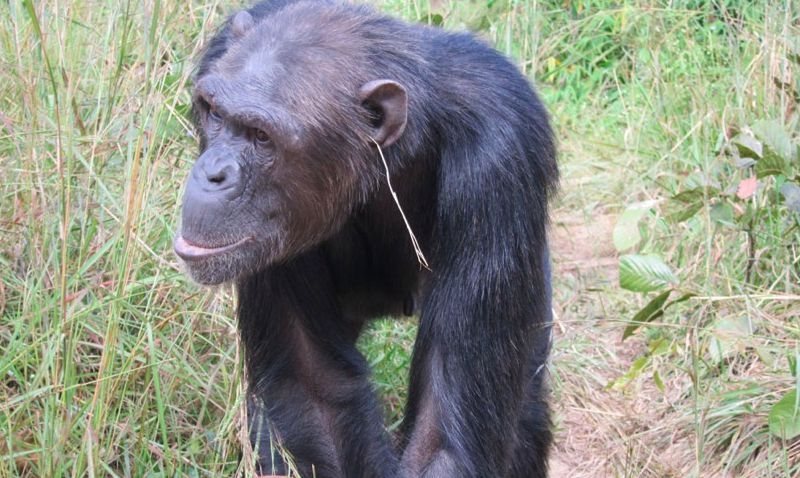
This post was triggered by something in the New York Times about “Julia,” a chimpanzee in a sanctuary in Zambia so named by the observing humans. The humans noticed her sticking blades of grass in her ears and this being adopted by other chimpanzees in the same sanctuary, and then passed on in further generations even after she died (Natalie Angier “Meet the Other Social Influencers of the Animal Kingdom” May 7, 2021). The original paper by Andrew Whiten (“The burgeoning reach of animal culture.” Science April 2, 2021) worked off a definition of culture ” as all that is learned from others and is repeatedly transmitted in this way, forming traditions that may be inherited by successive generations.” This was presented as part of the argument against human centeredness. “Culture” must have universal evolutionary advantages for all life forms as it allows “traits” (such as “grass in ears”) to move “horizontally” (through discovery/learning/teaching) among adults and their descendants as well as “vertically” (through genetic drift and biological reproduction).
I will leave the evolutionary implications to the authors of the various articles quoted by Angier, and translated into NYT speak. What fascinates me is the production of the trait in the history of the group. Van Leewen et al. who first reported on the case emphasize that they could not find anything functional to the behavior. They titled their paper “group-specific arbitrary tradition”—an excellent definition of “culture” (and a better one than Whiten’s). Interestingly, no one in the small crowd indexed by the journalist appears to have looked for the origin of the behavior, thereby suggesting that it was an “original.” Someone who commented on the first reporting of the case in the Smithsonian Magazine wondered whether Julia had picked up on something she saw a human do, e.g. wear earrings. But we are not given any evidence on the (pre-)history of the behavior. So, we are told of a behavior (“grass-in-hear”) that is, as Lévi-Strauss once said, subsequently “adopted on a collective mode” (1971: 560) and thus becomes a “trait” somehow distinctive (Bourdieu 1977 [1970]:5) of the group.
For many weeks, I was struck by the extent to which media like the New York Times, or governors like Cuomo, justify authoritative acts through a form of what my generation of anthropologists called “functionalism.” They keep telling us that the new order or regulation is the best, and sometime even only, act that will slow the spread of C19. In general, functionalism operates on the idea that, in the not so long run, everything human beings do, however odd it may appear, is the one best solution to achieve a practical, material, goal, given a particular local group (society, system, etc.) at a particular time in its history. At his most combative, Harris argued for example (1966) that cows were “sacred” to Hindus in India because they eat garbage, produce fuel and store milk, and all these tasks are best performed if the cows stay skinny and roam the streets. Malinowski, to my teachers at Chicago, was the poster anthropologist for functionalism. In the 1960s Marvin Harris at Columbia was the most pugnacious of the functionalists. As Lévi-Strauss once put it in his usual pithy way, for functionalists “totems are good to eat” ([1962] 1963: ).
Whether closing restaurants in March 2020 was functionally necessary, or a form of poetic deep play, is something that will be debated for years. What is certain (at least to me) is that closing restaurants (and vast empty national parks, beaches, etc.) was justified in functionalist terms: all the acts of these weeks in March and April were the best practical, functional ones our governors could think of, based on what experts were telling them. Some governors resisted. Experts disagreed. But the justifications in any debate arising at the time were consistent: this had to be done in just this way.
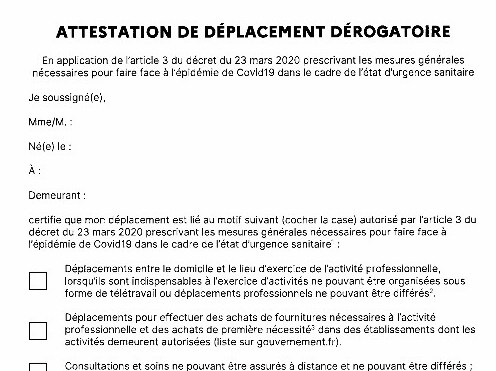
For a few weeks, the French State required people to fill this form if they wished to go more than half-a-mile from their residence. As far as I know France is the only State to have had such a requirement.
A few weeks into the Corona epoch, what must have confused some of our most thoughtful governors was the variety of the responses other governors were giving to the same health challenge, even when following the advice of similarly credentialized epidemiologists. The virus remained the same, but what governors were doing about it was not. Without mentioning the more controversial figures, it remains a puzzle how the governors of Sweden decided on a very different road than the one taken by about every other governor in what is generally named these days “the global North.” The range of expert, authoritative, advice was the same everywhere (and similarly fast evolving) but the response was not. As I argued elsewhere, the advice, as is the case with any speech act, is a trigger, not a cause—even though some governors at least try to say otherwise.
By June, as the virus seemed to move away from places like France or New York State, the variation in the governors’ responses greatly expanded. On such matters as opening, or not, beaches and forests, restaurants (inside or outside), barber shops and clothing stores, the governors of various localities came up with different solutions and time lines. Some boundaries between localities remain, in middle July, still hard (e.g. between France and the US), though others are variously made porous (e.g. between France and Italy or Germany). As the virus started to pop in places that it appeared to have by-passed (say Florida or Texas) governors came up with even more variations. Noone, so far, appears to have returned to March 2020 regulations—though it would not be surprising if some governors tried.
To a cultural anthropologist steeped in the Boasian tradition, the emerging and expanding variation in the responses to C19 are something to expect and I will dare say “respect.” That is, human beings, throughout history (cultureS) have always found other ways to live within an environment. Given a challenge, from finding food in a forest, to some virus starting to kill them, human beings will find other responses that may also be “suitable” (Boas 1887) for the problem at hand. Ruth Benedict once asked us (1932) to marvel at the multiplicity of rituals on such fundamental matters as mourning a death, even across populations fully aware of their neighbors’ doing. All of them must perform the same “function” but in quite different ways, and with different costs. As Lévi-Strauss also put it, “totems are good to think” (1971: 560). Note that this is not be taken in a cognitive way. Dealing with a threatening virus will make anyone think, but eventually, only some of what people can imagine will be “adopted in the collective mode” (Lévi-Strauss 1971: 560), that is only some symbolic forms will become institutionalized by governors, enforced over a population, and resisted by some, sometime.
All this must a problem for epidemiologists and governors…
REFERENCES
References
Benedict, Ruth 1932 “Configurations of culture in North America” American Anthropologist 34:1-27.
Once upon a time culture was everything, even the kitchen sink (Tylor [1871] 1958). And then culture became a “value-concept” (Weber [1897] 1994) or a “system of symbols” (Schneider 1980). And then the word all but disappeared from serious theorizing, to be replaced by words like “epoch,” “episteme,” habitus, paradigm, and now “ontology.” But few, over the decades, have approached what “culture” attempted to capture, at least in the Boasian tradition, the way Latour did when he wrote:
‘Culture’ … word used to summarize the set of elements that appear to be tied together when, and only when, we try to deny a claim or to shake an association … No one lives in a ‘culture’ … before he or she clashes with others … People map for us and for themselves the chains of associations that make-up their sociologics. The main characteristics of these chains is to be unpredictable–for the observer” (Latour, author’s italics. 1987:201-202)
I have been clear about this since, at least, 1987 and this has guided my work with McDermott.
I am very comfortable with this way of putting what I have been trying to say, throughout my career about “America.” I have always written that I am not concerned with “everything that can be found in the United States” and even less with “what individual Americans believe”
Those who know my work know that I am a great admirer of the historian Lawrence Cremin whom I happily coopt not only as an anthropologist, but also as an anthropologist ahead of his time even as he channeled the Boasian tradition he was taught at Columbia while a graduate student.
What I found this morning is a wonderfully clear critique not only of most definitions of education, including common ones from anthropologists, but, most impressively, of most definitions of “culture.”
This is the footnote:
Bailyn advances a definition of education as “the entire process by which culture transmits itself across the generations.” Yet, as Werner Jaeger made clear in the introduction to Paideia, until the word “culture” is clarified, such a definition remains obscure. “We are accustomed to use the word culture,” Jaeger noted, “not to describe the ideal which only the Hellenocentric world possesses, but in a much more trivial and general sense, to denote something inherent in every nation of the world, even the most primitive.” He was referring, of course, to the concept as developed by the social scientists-a usage he saw associated with “the positivist passion for reducing everything to the same terms.” By Bailyn’s definition, “education” is ultimately synonymous with “enculturation,” as that term is used by the anthropologists, notably Melville Herskovits. I myself am sympathetic to Jaeger’s insistence that true education implies the deliberate, self-conscious pursuit of certain intellectual, ethical, and aesthetic ideals, though I am perfectly ready to grant that nondeliberate influences are often, if not always, more powerful and pervasive and that the educational historian must be concerned with both. For a statement of a similar problem of definition that has long bedeviled literary historians, see Howard Mumford Jones, The Theory of American Literature (Ithaca, N.Y.: Cornell University Press, 1948), pp. 59-61 and passim. My reference to “the architecture of contemporary education” is taken from the lectures of my colleague Martin S. Dworkin in his course at Teachers College on “Education, Ideology, and Mass Communication.” (Cremin 1965: 75)
Note the attack on reductionism and enculturation; note “granting nondeliberate influences” as a kind of exception to “deliberate, self-conscious, pursuit” (aka, in my current vocabulary: practical meta-discursive work).
Note also Cremin approving of a metaphor not be taken as “constructivist” but rather as a prefiguration of Latour’s ANT: the ‘architecture’ of education. I am not sure what Cremin would have done of my added comment that the building, as an assemblage of rooms and corridors assembled on the basis of competing blue-prints with much cracks papered over would look more like the buildings that delighted Lévi-Strauss ([1962] 1966: 17): Cheval’s villa,
Facteur Cheval’s house
or Mr. Wilmmick’s suburban villa as imagined by Charles Dickens (who must have seen versions of it!). And, among many others, a Texas version…

 The humans noticed her sticking blades of grass in her ears and this being adopted by other chimpanzees in the same sanctuary, and then passed on in further generations even after she died (Natalie Angier